Prolonged urban living and digital screen immersion exhausts Directed Attention in the prefrontal cortex. Immersion in natural environments engages “Soft Fascination,” replenishing cognitive stamina and unlocking creative problem-solving.
Step onto a crowded downtown street corner in Tokyo, New York, or London at 5:00 PM. Thousands of pedestrians hustle past your shoulders. Automobile horns blare, flashing neon billboards scream for your visual focus, smartphone alerts chime in your pocket, and subway vents hiss steam from beneath the pavement. To safely cross the street without being struck by a vehicle, your brain must actively deploy massive inhibitory control—suppressing sirens, ignoring advertisements, and calculating closing speeds of oncoming buses.
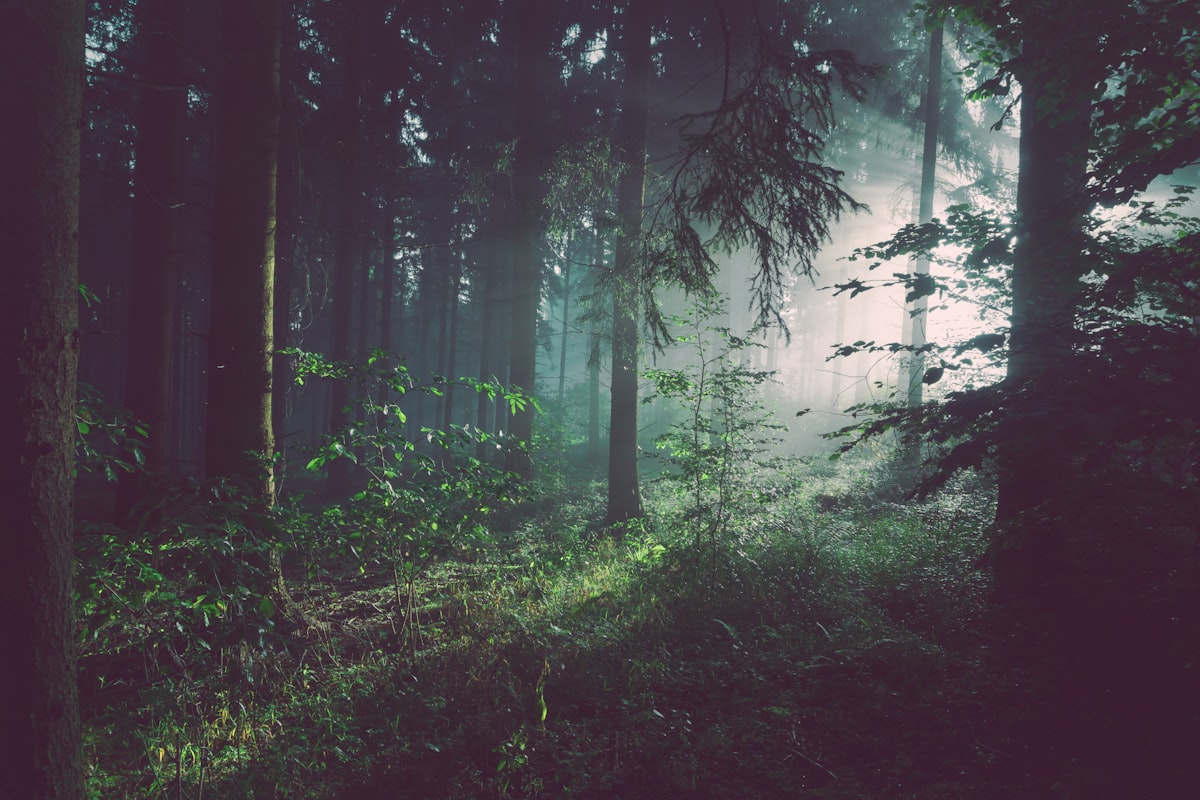
Now, transport yourself into a secluded pine forest in the Pacific Northwest. Sunlight filters through the canopy in dappled patterns. A gentle breeze rustles the cedar needles. In the distance, water babbles over smooth river stones. You hear the faint call of a songbird. The air smells of rich earth, rain, and resin.
Within minutes of walking among the trees, a palpable, visceral shift occurs throughout your physiology: your shoulders drop, your breathing deepens, the relentless chatter of your internal monologue quiets down, and a profound sense of mental clarity washes over your mind. What is the physical mechanism behind this transformation? Is nature merely a poetic luxury, or is it a biological necessity for human cognitive survival?
The answer is Attentional Restoration Theory (ART), formulated by environmental psychologists Stephen and Rachel Kaplan at the University of Michigan. ART provides the empirical cognitive framework that explains why natural environments are nature’s ultimate cognitive reset switch.
1. The Two Modes of Attention: Voluntary vs. Involuntary
To understand why modern life leaves us chronically drained, we must distinguish between the two primary attentional engines identified by the Kaplans, grounded in William James’s 19th-century psychology:
A. Directed Attention (Voluntary / Top-Down)
Directed attention is the cognitive muscle of the prefrontal cortex (PFC). It is the effortful, voluntary ability to focus on a task that is not inherently interesting (e.g., writing a report, debugging software code, calculating taxes, or navigating rush-hour traffic) while actively inhibiting distractions.
Directed attention is an extraordinary evolutionary capability, but it operates on an extremely fragile biological battery. Every hour spent staring at spreadsheets, Zoom calls, and social media feeds drains this finite inhibitory energy. When directed attention is exhausted, you enter Directed Attention Fatigue (DAF): you become irritable, impulsive, indecisive, prone to careless mistakes, and emotionally reactive.
B. Soft Fascination (Involuntary / Bottom-Up)
In stark contrast, natural environments engage what the Kaplans termed “Soft Fascination.” Nature is filled with stimuli that effortlessly capture bottom-up attention without demanding conscious mental effort: drifting clouds, rustling leaves, dancing campfires, ocean waves breaking on sand, and fluttering leaves.
Soft fascination does not require mental strain. It gently occupies the perceptual apparatus without monopolizing working memory, allowing the overworked inhibitory mechanisms of the prefrontal cortex to completely power down, rest, and physically replenish their metabolic neurotransmitter reserves.
2. The Four Pillars of a Restorative Environment
According to Attentional Restoration Theory, for an environment to produce profound cognitive restoration, it must fulfill four essential architectural criteria:
- Being Away: A distinct physical or psychological conceptual separation from your daily workplace, obligations, and stressful routines. It provides an emotional sanctuary where daily pressures cannot intrude.
- Extent: The environment must feel expansive, coherent, and rich enough to constitute a whole other world. A vast mountain trail, a botanical garden, or an ocean coastline provides rich spatial extent that invites gentle exploration without overwhelming.
- Soft Fascination: Visual and acoustic stimuli that hold attention effortlessly (waterfalls, sunsets, dappled forest light) without creating cognitive overload.
- Compatibility: A deep harmonious alignment between the individual’s personal inclinations and the environmental demands. In wild nature, humans feel an innate evolutionary compatibility—our sensory systems were tuned over 300,000 years of hominid evolution to process natural landscapes.
3. The Creativity Boost: The 4-Day Backpacking Study
In 2012, cognitive psychologists David Strayer at the University of Utah and Ruth Ann Atchley at the University of Kansas published a landmark study demonstrating the extraordinary cognitive benefits of wilderness immersion.
They administered the Remote Associates Test (RAT)—the gold standard psychological measure of complex creative insight and divergent problem solving—to groups of healthy adults. One cohort took the test in their normal urban routines, while another cohort took the test after spending four days backpacking in the wilderness without smartphones, laptops, or digital devices.
The results were jaw-dropping: Four days of immersion in wild nature increased creative problem-solving performance by a staggering 50%! By silencing directed attention fatigue and digital notifications, the Default Mode Network and Executive Network were allowed to recalibrate, unlocking extraordinary creative breakthroughs.
4. Shinrin-Yoku: The Japanese Science of Forest Bathing
In Japan, the practice of Shinrin-yoku (“Forest Bathing”) is not treated as mere leisure; it is an officially recognized, medically prescribed branch of preventative healthcare. Pioneering medical researcher Dr. Qing Li at Nippon Medical School in Tokyo has extensively mapped the physiological biomarkers of forest immersion:
- Cortisol Reduction: A two-hour forest walk reduces salivary cortisol levels by over 16% and lowers systolic blood pressure significantly more than an equivalent walk in an urban commercial district.
- Autonomic Nervous System Shift: Heart Rate Variability (HRV) analysis shows an immediate surge in parasympathetic (“rest and digest”) vagal tone and a sharp drop in sympathetic (“fight or flight”) adrenaline activity.
- Phytoncides and Natural Killer (NK) Cells: Trees and evergreen plants emit volatile antimicrobial organic compounds called phytoncides (such as alpha-pinene and limonene) to protect themselves from insects and fungi. Inhaling phytoncides during a forest walk stimulates the human immune system, boosting the activity and count of Natural Killer (NK) cells—specialized white blood cells that destroy viral infections and early-stage cancer cells—with benefits lasting up to 30 days!
5. Actionable Nature Dosing: The Nature Pyramid
You do not need to quit your job and live in the deep wilderness to reap the benefits of Attentional Restoration Theory. Apply the Nature Pyramid framework:
1. The 20-Minute Daily Micro-Dose (City Parks)
Spend 20 minutes every day sitting or walking in an urban park, garden, or tree-lined street without looking at your smartphone. MaryCarol Hunter’s research confirms that 20 minutes in a green space produces the steepest drop in stress hormones per minute invested.
2. The 5-Hour Monthly Reset (State Parks & Forests)
Dedicate one afternoon every month (roughly 5 hours) to exploring a regional nature reserve, beach, or mountain hiking trail, completely detached from digital work communications.
3. Biophilic Interior Engineering (Bringing Nature Indoors)
If you work in a high-rise office, incorporate biophilic design: place leafy living plants (such as snake plants, pothos, or ficus) on your desk, face your workstation toward an exterior window displaying green foliage, and play ambient acoustic recordings of natural rainfall or forest birds through headphones.
Frequently Asked Questions
Can viewing photographs of nature restore attention?
Yes, though to a lesser degree. Studies by Stephen Kaplan and Marc Berman showed that participants who viewed high-resolution photographs of natural landscapes for just 10 minutes displayed measurable improvements on working memory tests compared to participants who viewed photographs of geometric city skylines.
Why does urban walking cause Directed Attention Fatigue?
Urban environments are filled with dramatic, unpredictable bottom-up hazards (traffic, horns, construction, aggressive marketing) that constantly threaten to hijack attention. The prefrontal cortex must continuously fire inhibitory signals to keep you walking in a straight line, causing rapid cognitive depletion.
Does Virtual Reality nature provide the same benefit?
VR nature simulations produce significant parasympathetic relaxation and mood improvement, making them wonderful therapeutic tools for hospitalized patients or astronauts. However, they lack the multi-sensory richness (wind, negative ions, organic scents, phytoncides) of genuine wild nature.
How does Attentional Restoration Theory apply to children with ADHD?
Landmark studies by Frances Kuo and Andrea Faber Taylor at the University of Illinois revealed that children with ADHD exhibited significantly improved concentration and impulse control after a 20-minute walk in a green park compared to a walk in a well-manicured urban neighborhood (“Dose of Nature”).
What is the “Fractal Dimension” of nature?
Physicist Richard Taylor discovered that natural patterns (clouds, coastlines, tree branches, mountain ridges) possess a specific statistical fractal dimension (D = 1.3 to 1.5). The human visual cortex processes these specific fractal geometries with minimum metabolic friction, inducing calming alpha brainwaves.
Nature is not a luxury retreat from the real world; it is the biological womb that sculpted our cognitive architecture. When your mind is exhausted by the modern digital storm, return to the trees. In soft fascination, your brain finds its truest home and deepest restoration.
