The adult human brain is not a hardwired, immutable machine. Through long-term potentiation, structural dendritic remodeling, and myelination, targeted cognitive challenge continuously reshapes physical brain architecture throughout the entire lifespan.
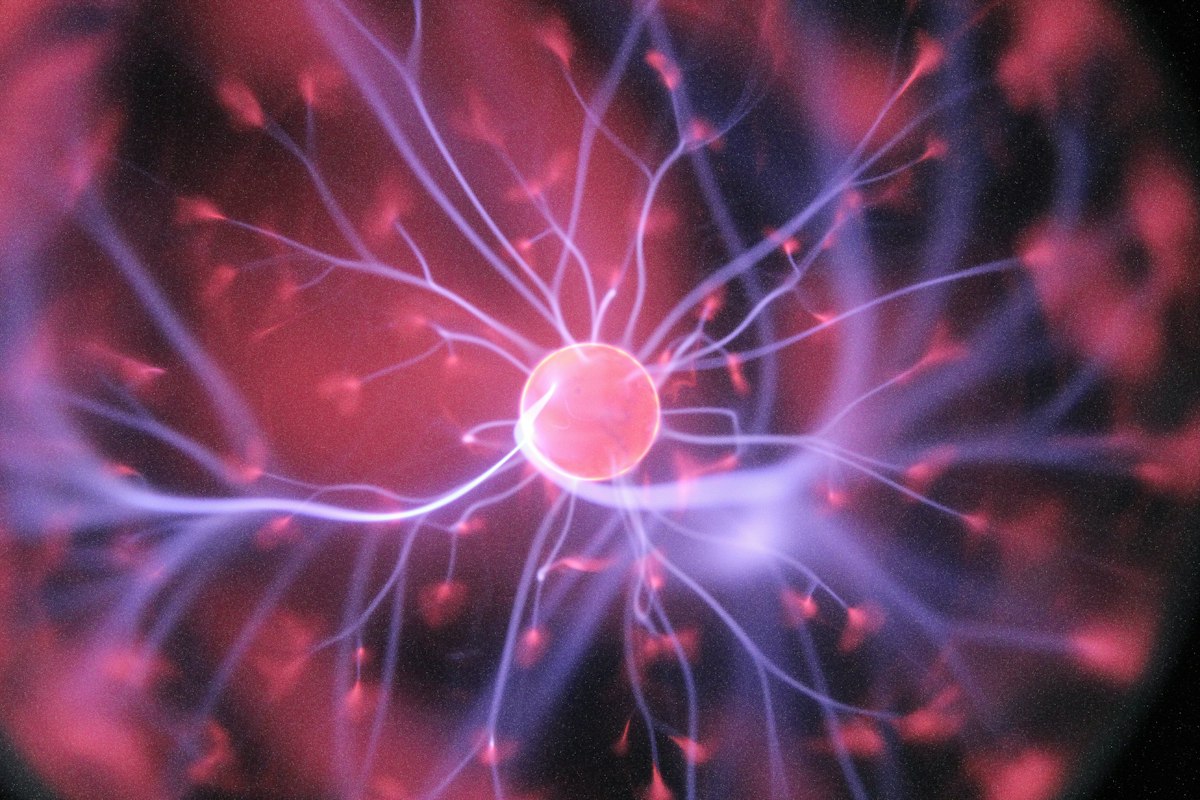
For more than a century, mainstream neurology was dominated by a dogma of biological fatalism. Spanish neuroanatomist Santiago Ramón y Cajal—widely considered the father of modern neuroscience—wrote in 1913: “In adult centers, the nerve paths are something fixed, ended, immutable. Everything may die, nothing may be regenerated.” Medical schools taught generations of physicians that after early childhood development, the physical wiring of the human brain was cast in concrete. If brain tissue was damaged or aged, it was permanently lost.
Over the past four decades, however, this pessimistic dogma has been completely overthrown. We now know that the human brain possesses an astonishing lifelong capacity called Neuroplasticity—the ability of neural networks to grow, reorganize, prune, and physically reshape their structural and functional architecture in response to experience, learning, sensory deprivation, and environmental challenge.
From the taxi drivers of London memorizing thousands of labyrinthine streets to stroke survivors recovering paralyzed limbs, the human brain reveals itself not as an inflexible electronic computer, but as a living, dynamic, ever-evolving biological sculpture.
1. Cellular Mechanisms: How the Brain Physically Changes
When we say the brain “reshapes” itself, what is physically occurring at the microscopic cellular level? Neuroplasticity operates across several distinct temporal and structural tiers:
A. Synaptic Plasticity and Hebbian Learning
In 1949, Canadian psychologist Donald Hebb formulated the golden rule of neurobiology: “Neurons that fire together, wire together.” When two interconnected neurons fire action potentials in close temporal synchrony, their synaptic connection strengthens—a physiological process known as Long-Term Potentiation (LTP).
At the chemical level, LTP is mediated by the influx of calcium ions through NMDA receptors in the postsynaptic dendritic spine. This calcium surge triggers the insertion of additional AMPA receptors into the postsynaptic membrane, making the receiving neuron exponentially more sensitive to future releases of the neurotransmitter glutamate. Conversely, synapses that fall out of synchrony undergo Long-Term Depression (LTD), weakening their connections (“neurons out of sync, lose their link”).
B. Structural Plasticity: Dendritic Spine Remodeling
Synaptic plasticity is followed by physical anatomical construction. Using two-photon in vivo microscopy, neuroscientists can watch living dendritic spines grow, sprout new buds, and establish entirely new synaptic junctions within hours of a subject learning a complex motor skill. Unused spines are physically absorbed and pruned away by microglial cells.
C. Myelination and White Matter Plasticity
Plasticity is not confined to grey matter. Oligodendrocytes (specialized glial cells) wrap layers of fatty myelin insulation around heavily trafficked axonal pathways. Increasing myelin thickness accelerates action potential conduction velocity by up to 100-fold, transforming bumpy country roads into high-speed fiber-optic neural highways.
2. Iconic Evidence: London Taxi Drivers and “The Knowledge”
The most famous empirical demonstration of structural neuroplasticity in healthy human adults was conducted in 2000 by neuroscientist Eleanor Maguire at University College London.
Maguire studied licensed London taxi drivers. To earn their license, drivers must master “The Knowledge”—memorizing over 25,000 streets, 20,000 landmarks, and thousands of traffic regulations across Greater London, a grueling mental ordeal that takes three to four years of daily study.
Maguire conducted structural MRI scans comparing London cabbies to a matched control group of ordinary adults and London bus drivers (who drive fixed routes and do not need spatial navigation):
- London taxi drivers exhibited a significantly larger posterior hippocampus—the brain region specialized for spatial mapping and navigation.
- Furthermore, the volume of grey matter in the posterior hippocampus correlated directly with the number of years spent driving a taxi! The longer they navigated London’s streets, the larger their hippocampus grew.
- When drivers retired, longitudinal scans revealed that their hippocampal volume gradually shrunk back toward baseline, proving that physical brain real estate expands with intense use and contracts with disuse.
3. Cross-Modal Plasticity: When Senses Swap Territory
What happens to the visual cortex when a person is born blind or loses their sight early in life? In an inflexible brain, Area V1 (the primary visual cortex) would sit useless, like an empty, abandoned parking lot.
Instead, functional neuroimaging reveals a breathtaking display of Cross-Modal Plasticity. In blind individuals reading Braille with their fingertips, Area V1 lights up with ferocious metabolic activity! The tactile signals traveling up the arm from the fingertip bypass their normal sensory endpoint and are hijacked by the visual cortex. Area V1 rewires its massive computational power to process tactile dots and acoustic spatial echoes, granting blind individuals superhuman tactile and auditory acuity.
4. Adult Neurogenesis: The Birth of New Neurons
For decades, science maintained that adult humans never generate new brain cells. In 1998, Peter Eriksson and Fred Gage proved that Adult Neurogenesis occurs throughout life in two specific neurological sanctuaries:
- The Subgranular Zone of the Dentate Gyrus in the hippocampus (critical for forming new memories and pattern separation).
- The Subventricular Zone, supplying interneurons to the olfactory bulb.
Thousands of new neural progenitor cells are born every day in the adult hippocampus. What determines whether these infant neurons survive and integrate into existing circuits? Physical cardiovascular exercise, intellectual challenge, and rich social environments flood the brain with Brain-Derived Neurotrophic Factor (BDNF), ensuring their survival. Conversely, chronic stress, sleep deprivation, and sedentary lifestyle kill newborn neurons before they can mature.
5. Actionable Protocols: Engineering Lifelong Neuroplasticity
To keep your cognitive architecture youthful, adaptable, and resilient against neurodegenerative decline, integrate these science-backed protocols:
1. Zone 2 Aerobic Exercise and BDNF Up-Regulation
Cardiovascular exercise is the single most potent neuroplastic catalyst known to medicine. Sustained aerobic exercise stimulates the release of BDNF (Brain-Derived Neurotrophic Factor), often termed “Miracle-Gro for the brain.” BDNF promotes dendritic branching, synaptic formation, and neurogenesis.
2. Deliberate Frustration and High-Friction Learning
Plasticity does not occur during effortless leisure. To trigger structural change in adult brains, you must experience the uncomfortable sensation of mental friction. Struggling to learn a complex new language, an instrument, or a technical discipline triggers the release of epinephrine and acetylcholine, chemically marking the specific neural circuits for synaptic modification.
3. Optimize Deep Wave Sleep (The Glymphatic Flush)
Plasticity is triggered during waking challenge, but the physical structural remodeling occurs exclusively during Slow-Wave Sleep and REM sleep. During deep sleep, the brain consolidates new synaptic connections while the glymphatic system flushes away metabolic toxic waste (beta-amyloid and tau proteins).
Frequently Asked Questions
Is there an age limit where neuroplasticity stops?
No. While developmental “critical periods” in childhood close (making native second-language accents harder to acquire), adult neuroplasticity persists into your 80s and 90s. Elderly individuals engaging in novel intellectual skills show robust synaptic growth and cognitive improvement.
Can neuroplasticity be negative (maladaptive)?
Yes. Chronic neuropathic pain, phantom limb syndrome, focal dystonia (musician’s cramp), and clinical depression are manifestations of maladaptive neuroplasticity—where the brain efficiently strengthens toxic, painful, or debilitating neural pathways through repetition.
How long does it take for neuroplastic changes to become permanent?
Early functional synaptic changes occur within minutes. However, durable structural changes—such as thick myelination and established dendritic networks—require approximately 8 to 12 weeks of consistent daily deliberate practice.
What role does acetylcholine play in adult plasticity?
In childhood, the brain is bathed in plasticity chemicals constantly. In adulthood, the brain gates plasticity strictly through attention. When you focus intensely on a challenging task, the nucleus basalis releases acetylcholine onto the cortex, unlocking the gating mechanisms and allowing synaptic weights to change.
Can meditation alter physical brain structure?
Yes. Landmark studies by Sara Lazar at Harvard showed that an 8-week course of Mindfulness-Based Stress Reduction (MBSR) produced measurable increases in grey matter density in the hippocampus and temporoparietal junction, alongside a reduction in the volume of the amygdala.
You are not stuck with the brain you were born with. Every thought you think, every skill you practice, and every challenge you conquer physically redraws the wiring of your mind. Neuroplasticity is the ultimate invitation to lifelong growth, resilience, and personal evolution.
