Your conscious visual experience is not an exact photographic capture of incoming light. It is a generative, Bayesian prediction continuously synthesized by your cerebral cortex and corrected only when incoming sensory data violates internal expectations.
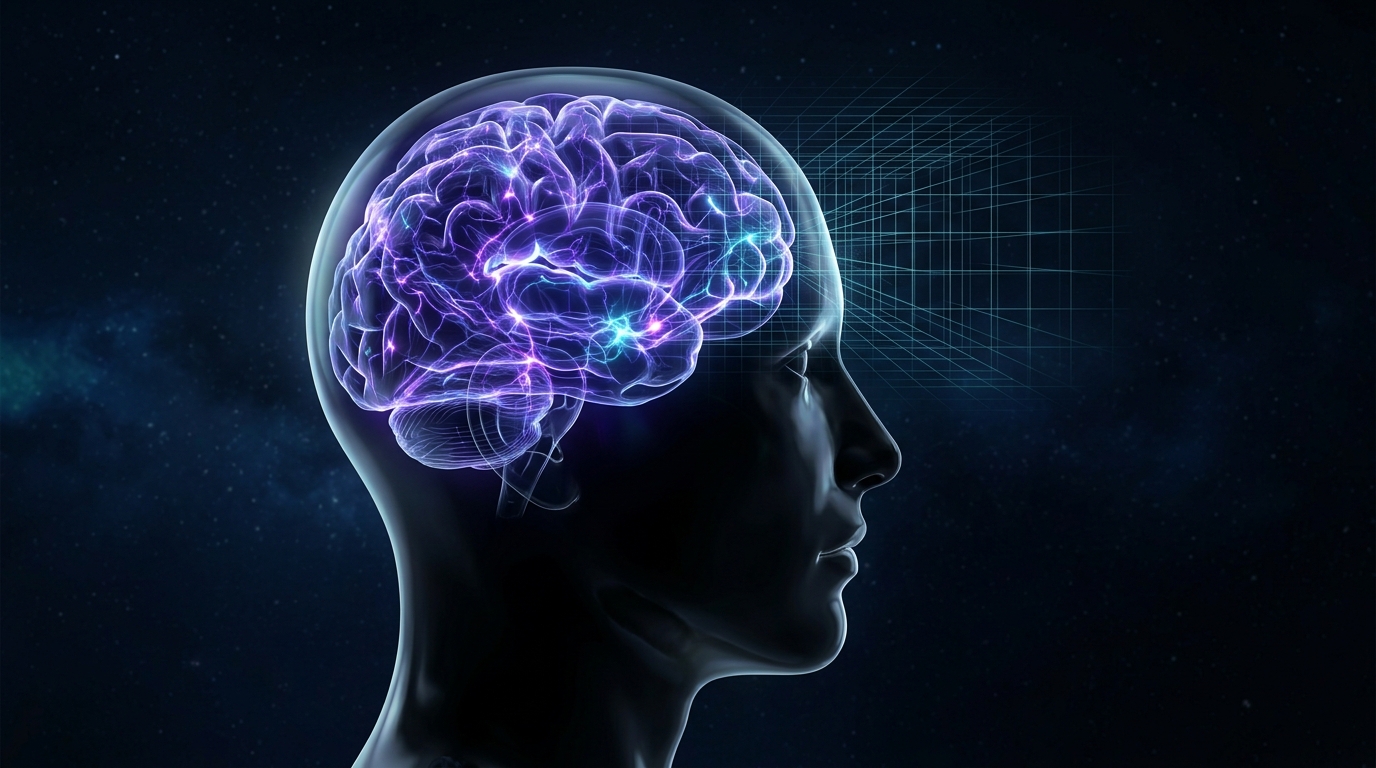
For centuries, classical philosophy and early experimental psychology treated the human sensory apparatus like an elaborate camera. The traditional assumption held that photons bounce off external objects, strike the retinal photoreceptors at the back of the eyeball, travel through the optic nerve into the primary visual cortex (V1), and get assembled upward into a conscious mental picture. In this classic “bottom-up” view, the brain sits quietly like a passive movie screen waiting for the world to project images upon it.
Over the past two decades, however, a profound revolution has swept cognitive science, computational neuroscience, and philosophy of mind: the paradigm of Predictive Processing and Active Inference. Pioneered by neuroscientists and philosophers such as Karl Friston, Andy Clark, and Jakob Hohwy, this framework turns the traditional model completely upside down. Your brain does not passively wait for reality to enter through the senses. Instead, your brain is an active prediction machine that continuously generates a top-down simulation of what it expects to encounter next, using incoming sensory inputs solely as feedback to calculate “prediction errors.”
1. The Problem of Neural Latency and the Speed of Light
To understand why evolution was forced to build a predictive brain, one must confront a fundamental physical bottleneck: biological signal transmission is extraordinarily slow. While electrical signals in fiber-optic cables propagate near the speed of light (300,000 kilometers per second), action potentials propagating along human axons travel between 1 and 120 meters per second. From the moment light hits your retinal rhodopsin molecules to the moment that signal is processed across secondary visual areas (V2, V4, MT, and the inferior temporal cortex), roughly 80 to 150 milliseconds elapse.
If you were driving a car on a highway at 100 kilometers per hour, your vehicle travels nearly 30 meters during a 100-millisecond delay. If an athlete tries to hit a baseball hurled at 95 miles per hour, the ball crosses home plate in approximately 400 milliseconds; if the batter had to wait for the visual data to arrive, compute the ball’s position, and then plan a motor swing, hitting the ball would be physically impossible. You would permanently live in the historical past, reacting to events that occurred a tenth of a second ago.
How does the human organism survive this latency? The brain resolves the dilemma by predicting the present. Rather than waiting for delayed sensory packets, high-level cortical regions project an anticipated model of the world forward in time. When you swing a bat, cross a busy street, or catch a falling glass, your motor cortex coordinates movement based on where your internal simulation predicts the object will be when your hand arrives, not where it was when light originally struck your retina.
This forward extrapolation relies on what control theorists call “forward internal models.” In motor neuroscience, every time an efference copy of a motor command is dispatched from the primary motor cortex (M1) to muscle fibers, an identical copy is routed into the cerebellum. The cerebellum immediately calculates the anticipated sensory consequences of that action. If you step onto an escalator that has stopped working, your brain has already predicted movement; when the expected movement fails to occur, you experience a momentary, disorienting stumble—a stark, visceral demonstration of an unfulfilled sensory expectation.
2. Hierarchical Bayesian Inference: How the Cortical Layers Communicate
The mathematical foundation underpinning predictive processing is Bayesian probability theory. The brain maintains an internal statistical model of the world—referred to as “priors” (prior probability distributions). When incoming signals from the environment (“likelihoods”) arrive, the brain computes the product of the prior and the likelihood to construct the “posterior”—which constitutes your immediate, conscious perceptual experience.
This computational architecture is organized hierarchically throughout the six cellular layers of the cerebral neocortex:
- Top-Down Driving Signals (Deep Cortical Layers V and VI): Higher-order frontal and parietal areas send descending projections to lower sensory cortices. These signals convey predictions: “You are standing in your kitchen; expect to see a coffee mug, a countertop, and morning sunlight.”
- Bottom-Up Prediction Errors (Superficial Cortical Layers II and III): Lower sensory areas receive physical photons and acoustic vibrations. Instead of transmitting the entire raw image upstream, lower layers compare the incoming signal against the descending prediction. If the prediction matches the input perfectly, no signal is sent upstream. Only the difference—the prediction error—is transmitted upward to recalibrate the model.
- Precision Weighting and Neuromodulation: The brain does not trust all prediction errors equally. In a dark room or heavy fog, sensory data is noisy; the brain down-weights the precision of incoming error signals and relies heavily on strong top-down priors. Neuromodulators like acetylcholine, dopamine, and norepinephrine adjust this precision weighting dial dynamically depending on environmental certainty and task relevance.
Neuroanatomical studies demonstrate that descending feedback connections from higher visual cortices to primary sensory areas outnumber ascending feedforward connections by a ratio of roughly 10 to 1. The brain expends ten times more computational energy broadcasting internal predictions downward than receiving raw data upward.
The Free Energy Principle and Metabolic Efficiency
Why would evolutionary pressure favor an architecture based entirely on error cancellation? The answer lies in thermodynamics and metabolic conservation. The human brain constitutes roughly 2% of total body mass yet consumes over 20% of the body’s total caloric energy at rest. The vast majority of this energy is expended in repolarizing neuronal membranes following action potentials and synaptic transmissions.
If the retina and primary visual cortex were forced to transmit every pixel of information up the visual hierarchy every millisecond, the energetic cost would incinerate the biological organism. By transmitting only prediction errors—the unexpected discrepancies between internal models and incoming photons—the brain compresses incoming data streams by orders of magnitude. The brain is an efficient compression algorithm governed by Karl Friston’s Free Energy Principle: biological systems resist thermodynamic entropy by minimizing informational surprise (variational free energy).
3. Optical Illusions as Windows into Strong Priors
Optical illusions are often regarded as amusing glitches or biological flaws. In predictive processing, however, illusions are the ultimate proof that the system is operating at peak computational efficiency. An illusion occurs when a powerful, highly adaptive evolutionary prior encounters an engineered sensory stimulus that contradicts typical physical assumptions.
The Hollow Face Illusion
If you look at the concave (hollow) inside of a hollow plastic mask of a human face, your brain almost invariably perceives it as a normal convex face protruding outward. Even when the mask is rotated slowly or when you consciously know the mask is concave, you cannot force yourself to see the concavity. Why?
Because throughout hundreds of millions of years of mammalian evolution, every face encountered has been convex. The top-down prior for “faces are convex structures illuminated from above” is mathematically so overwhelming that it completely crushes the weak bottom-up stereoscopic prediction error signals arriving from the optic nerve. The brain overrides actual physical light to preserve its statistical truth.
The Kanizsa Triangle and Illusory Contours
When presented with three “Pac-Man” shapes arranged facing inward with notches aligned, the brain immediately perceives a bright, solid white triangle hovering over the background, complete with sharp boundaries and distinct depth. In reality, no lines exist; the physical luminance across the entire white background is completely uniform.
Under predictive coding, higher cortical regions hypothesize the existence of an occluding white triangle because that single macro-hypothesis elegantly explains why all three circular discs appear partially obscured. The brain constructs illusory borders in lower visual cortices (V1 and V2) to satisfy the high-level hypothesis. Functional MRI studies confirm that neurons in area V2 fire actively along the empty spaces of the Kanizsa triangle, actively drawing the lines that physical reality omitted.
The Craik-O’Brien-Cornsweet Effect
In this classic perceptual demonstration, two adjacent rectangular surfaces appear to be completely different shades of grey—one light grey, one dark charcoal. Yet if you place a pencil across the boundary line separating them, you instantly realize that both surfaces have identical reflectance and luminance.
The illusion is generated by a subtle luminance gradient at the seam between the surfaces. Because natural lighting in terrestrial environments involves cast shadows and uneven illumination, the visual system’s evolutionary priors assume that sharp luminance steps at boundaries indicate different materials, while smooth gradients indicate changes in lighting. The brain uses the boundary information to extrapolate color across the entire surface, effectively “painting” the tiles with divergent perceived shades.
4. Clinical Implications: Hallucinations, Psychosis, and Neurodiversity
The predictive processing paradigm provides an extraordinarily unified framework for understanding diverse psychiatric and neurodevelopmental conditions, moving medicine away from crude chemical imbalance theories toward computational psychiatry.
Schizophrenia, Hallucinations, and Aberrant Salience
Historically, hallucinations were viewed as random sensory noise or neurochemical delirium. In predictive coding, a hallucination is understood as a failure of precision weighting: top-down priors are assigned pathologically high precision, while bottom-up sensory prediction errors are down-weighted.
When an internal expectation becomes hyper-weighted, it ceases to require sensory verification. The internal model is experienced as external reality. Intriguingly, individuals with early-stage schizophrenia are notably immune to the Hollow Face Illusion; because their top-down facial priors are less dominant relative to raw bottom-up sensory signals, they perceive the concave mask as it physically is—concave.
Autism Spectrum Conditions (ASC): The Hyper-Precise Error Hypothesis
Conversely, researchers like Elizabeth Pellicano and David Burr propose the “HIPPEA” hypothesis (High Inflexible Precision of Prediction Errors in Autism). In individuals on the autism spectrum, the brain may assign exceptionally high precision to every incoming sensory prediction error.
When every minute sensory discrepancy is treated as critically important rather than filtered out as irrelevant background noise, the world becomes an overwhelming torrent of unpredictable sensory data. Fluorescent lights flicker intensely, subtle fabric textures feel abrasive, and small deviations in routine feel catastrophically chaotic. Repetitive behaviors (stimming) and rigid routines serve as logical compensatory mechanisms: they generate completely predictable sensory environments where prediction errors are driven to zero.
5. Evolutionary Energy Conservation: The Dark Room Problem
Critics of predictive processing often raise what is known as The Dark Room Problem: If the brain’s sole objective is to minimize prediction errors, why don’t humans simply crawl into a dark, quiet, unchanging room and stay there forever? In a pitch-black closet, prediction error is permanently zero.
The resolution to this paradox lies in Active Inference and phenotypic homeostatic priors. Natural selection does not equip an organism with arbitrary priors; it equips us with deep, genetically encoded evolutionary priors that mandate self-preservation. Our internal model expects our core body temperature to remain at 37°C, blood glucose levels to remain within safe thresholds, and hydration levels to stay balanced.
If you stay inside a dark room indefinitely, dehydration and starvation trigger massive, existential prediction errors: “My internal model expects food and water, yet my interoceptive receptors register deprivation.” To cancel these unbearable visceral prediction errors, the organism must take action: leave the dark room, hunt, gather, explore, and forage. Curiosity and exploration are mathematically necessary strategies for maintaining homeostasis over extended temporal horizons.
6. Active Inference: How Movement Resolves Discrepancy
In traditional neuroscience, perception and action are treated as separate modules: perception takes information in, while motor commands push actions out. Predictive processing synthesizes them into a single mathematical imperative: minimizing free energy.
When an internal prediction does not match incoming sensory data, the brain has exactly two options:
- Update the Prediction (Perception): Change the internal model to align with sensory reality. (e.g., “I thought that coat rack was a person, but looking closer, it is clearly a coat rack.”)
- Act on the World (Action): Move your body to force sensory reality to match your internal model. (e.g., If you predict your arm is raised, your motor neurons fire muscle contractions until proprioceptive sensors confirm that your arm is indeed raised.)
Under Active Inference, motor actions are not commands to move; they are proprioceptive predictions. Your brain predicts what it would feel like if your hand were holding a coffee cup, and the spinal reflex arc automatically fires motor units until the sensory feedback eliminates the prediction error. We literally move by imagining movement and letting our biology close the gap.
7. Practical Framework: Mastering Your Predictive Architecture
Understanding that perception is an active generative model empowers us to develop targeted cognitive hygiene habits that reshape our daily functioning:
A. Cognitive Reframing Through Prior Updating
When you feel acute social anxiety or workplace intimidation, recognize that your racing heart and shallow breathing are top-down interoceptive predictions based on past threat models. By consciously questioning the prior (“Is this environment genuinely life-threatening, or is my nervous system applying an outdated heuristic?”), you allow frontal executive networks to down-regulate the precision of visceral panic.
B. Environmental Engineering for Error Reduction
Because cognitive bandwidth is consumed whenever predictive models must navigate high entropy, cluttered and chaotic physical workspaces trigger constant background micro-predictions that drain mental stamina. Designing clean, structured physical and digital environments eliminates extraneous prediction errors, freeing cortical resources for creative synthesis and deep intellectual work.
C. Deliberate Sensory Calibration
To avoid perceptual stagnation and confirmation bias, deliberately expose yourself to foreign perspectives, unfamiliar musical structures, and novel physical environments. Experiencing mild, safe prediction errors keeps the synaptic weights of your predictive hierarchy flexible, adaptable, and resilient against cognitive decline.
Frequently Asked Questions
Does the predictive mind theory mean that reality is an illusion?
No. Predictive processing does not claim that external physical reality does not exist. Rather, it asserts that you never have direct, unmediated contact with physical reality. Your conscious experience is an internally synthesized virtual reality simulation that is heavily constrained, audited, and corrected by incoming photons, vibrations, and molecules from the physical universe.
How fast does the brain update when a prediction fails?
Cortical prediction error signals propagate upstream within 30 to 80 milliseconds. When an expectation is shattered—such as taking a sip of salt water when expecting sweet lemonade—evoked response potentials like the P300 and Mismatch Negativity (MMN) register across EEG tracings almost instantaneously, triggering immediate motor pauses and attentional shifts.
Can we consciously alter our top-down priors?
Yes, through metacognitive training, deliberate learning, and mindfulness meditation. When you learn to identify cognitive biases and perceptual blind spots, you actively retrain your higher-order generative models, allowing you to observe raw sensory data with greater neutrality and less automated distortion.
Is predictive processing used in modern artificial intelligence?
Extensively. Modern Large Language Models (LLMs) like GPT-4 operate on the fundamental principle of next-token prediction, which is conceptually identical to predictive coding. In robotics, predictive state representations and active inference algorithms allow autonomous agents to navigate uncertain, noisy environments with unprecedented energy efficiency.
What is the difference between feedforward vision and predictive vision?
In feedforward vision, information travels strictly from the retina up to higher cognitive centers like a factory assembly line. In predictive vision, higher cognitive centers continuously transmit hypotheses downward to meet incoming sensory signals, and only the unpredicted discrepancies travel upward.
You do not see the world as it is; you see the world as your brain expects it to be, minus your mistakes. Embracing the predictive mind transforms how we understand human cognition, mental health, artificial intelligence, and everyday perception.
